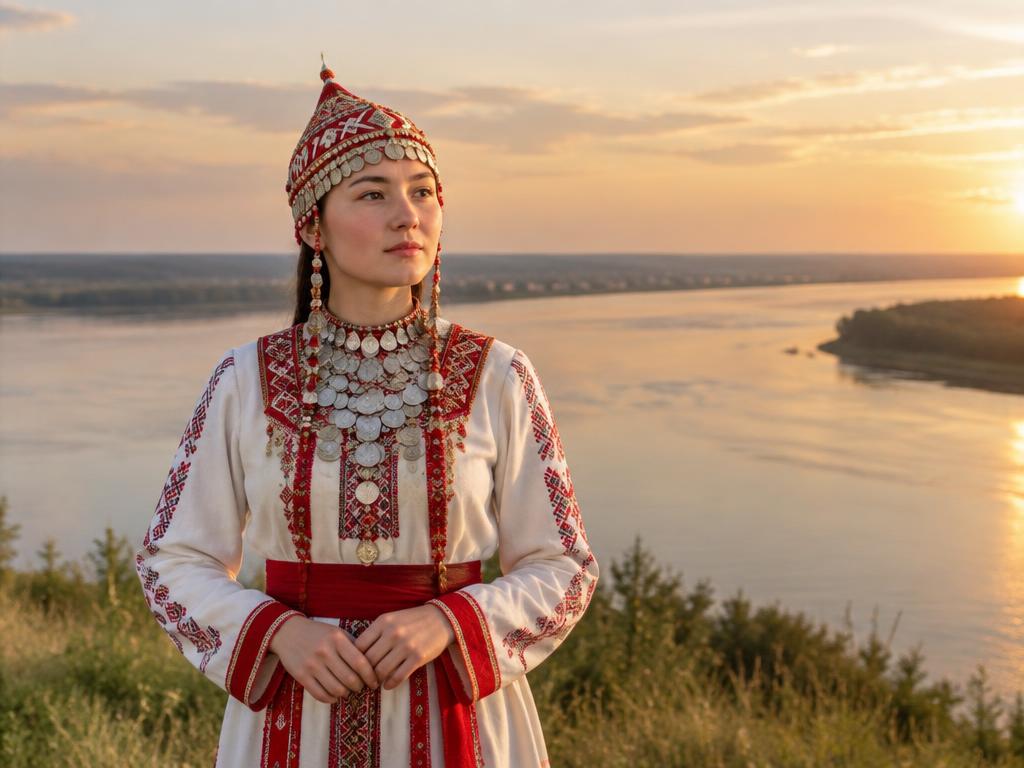
Origins: a Turkic people of the Middle Volga
The Chuvash are an Oghuric Turkic people whose language preserves the surviving branch of Oghuric Turkic. Their ethnogenesis is closely associated with the Volga Bulgars and the wider Onogur–Bulgar world. [1, 2]
Their population history reflects contact and admixture across the Eurasian steppe and Middle Volga: Bulgar and Onogur Turkic groups, earlier Hunnic-era steppe populations, local Uralic-speaking peoples, Iranian-speaking steppe groups including Alans, and neighboring East European populations, including Slavs. These are historically relevant ancestry and contact layers, not five independently measured genetic percentages. The precise contribution of each remains unresolved. [1–4]
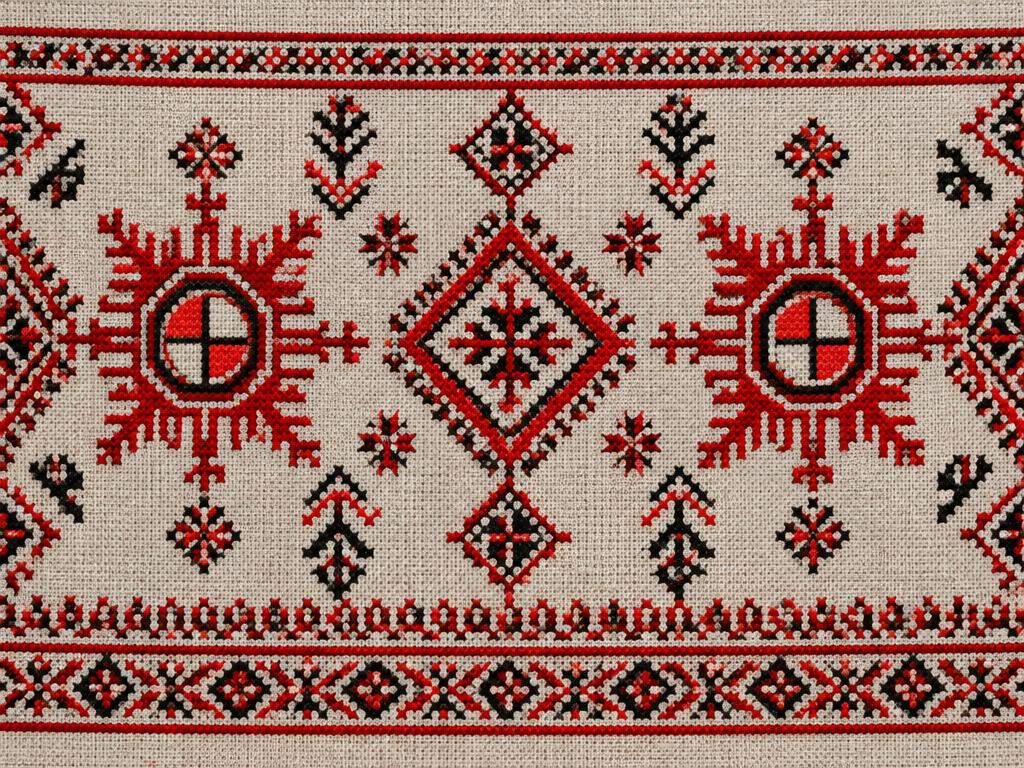
Autosomal ancestry
Genome-wide research places Chuvash within a predominantly West Eurasian Volga–Ural genetic landscape with a substantial West/Central Siberian-related component and a smaller East Asian-related component. In one published regional analysis, these last two components averaged approximately 20% and 5%, respectively; their values are specific to that study’s ADMIXTURE model. [3]
Deep-ancestry model
World genetics
50.4% Western Steppe Herder; 18.2% Siberian; 17.6% Anatolian Neolithic Farmer; 8.7% Western Hunter-Gatherer; 5.0% East Asian; and 0.1% Levantine Neolithic Farmer.
Both models are built from genome-wide data of worldwide reference populations; category names and percentages differ between models and are not directly interchangeable.
Genetic affinities in the Volga–Ural region
In one distance model, the Chuvash target shows its smallest distances to Besermyans and Udmurts, followed by the listed Bashkir groups and Tatars. The result is consistent with long-standing regional connections, although the distances depend on the calculator and reference dataset. [3]
| Comparison population | Genetic distance |
|---|---|
| Besermyan (n=6) | 4.650 |
| Udmurt (n=51) | 4.904 |
| Bashkir, Ianaul (n=8) | 5.278 |
| Bashkir, Ilishevsky (n=6) | 5.624 |
| Bashkir, Karaidelsky (n=4) | 5.664 |
| Tatar (n=17) | 5.768 |
Ancient-DNA ancestry models
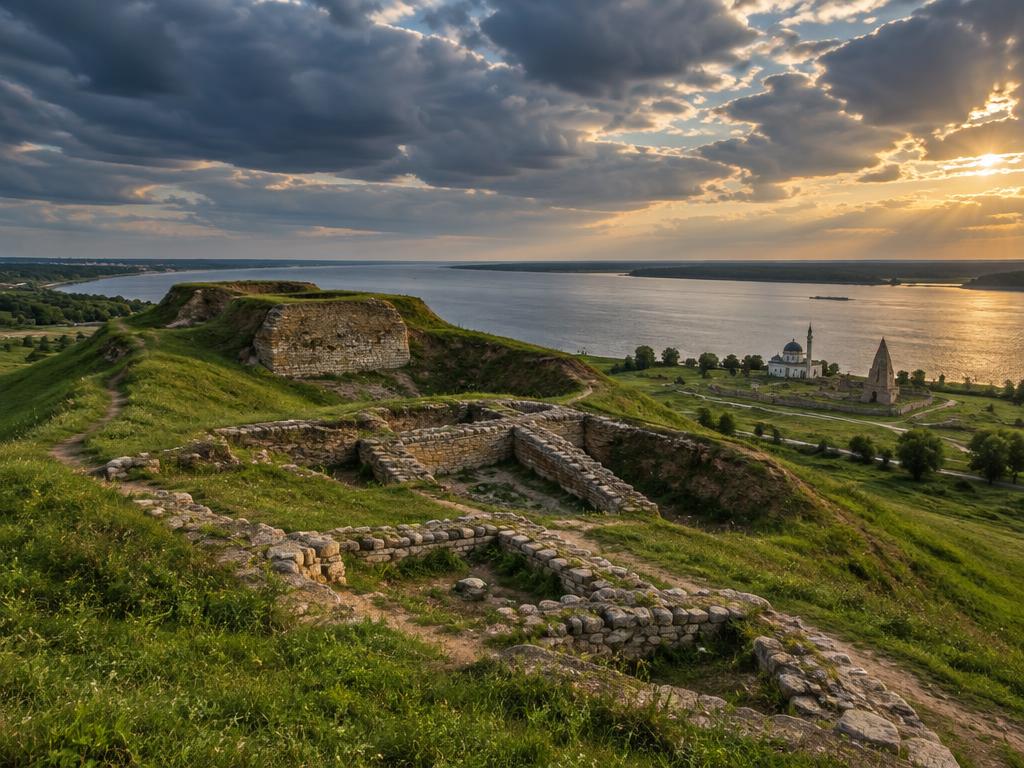
Early medieval Volga Bulgar-related ancestry
A two-source qpAdm model fits the Chuvash target with 73.1% Early Medieval Middle Volga Bulgar-related and 26.9% medieval Poland-related proxies (p = 0.869; 579,720 SNPs). This model is compatible with substantial Bulgar-related ancestry, but the percentages are conditional on its selected reference populations.
Six-source ancient model
An alternative model uses 35.5% Bronze Age Estonia, 24.9% Sintashta, 14.1% Late Bronze Age Ulaanzuukh, 11.5% Bronze Age Krasnoyarsk, 9.1% Early Bronze Age Bulgaria and 4.8% Bronze Age Gonur (p = 0.847). The sources serve as ancient genetic proxies, not literal ethnic ancestors.
Middle Volga three-source model
A third model fits Chuvash as 43.3% Iron Age Lithuania-related, 21.3% Minino/Belaya Mazunino-related and 35.4% medieval Turkic (p = 0.984). In the same framework, Kazan Tatars are modeled as 48.5%, 17.3% and 34.2%, respectively (p = 0.922).
Huns, Onogurs and the steppe connection
Historical and genetic research places the Onogurs within the wider post-Hunnic movements that contributed to Bulgar formations. The Volga Bulgars subsequently interacted with established Middle Volga populations. Ancient DNA from migration-period Europe documents extensive mixture among steppe newcomers and local communities, but it cannot assign a precise “Hun percentage” to present-day Chuvash. [2, 4]
Khazar-period burials provide useful evidence for the diversity of neighboring Turkic-era steppe societies. A study of nine elite burials identified R1a, C2b, G2a, N1a, Q and R1b paternal lineages, demonstrating heterogeneous paternal origins. Those nine individuals cannot be treated as a representative genome-wide sample of all Khazars or as direct measurements of Chuvash ancestry. [5]
The Chuvash genetic picture is therefore compatible with a Bulgar–Onogur Turkic historical core and substantial admixture involving earlier steppe and regional Volga–Ural populations. Directly separating Hun, Alan, Slavic and Uralic-speaking ancestors into exact modern percentages requires more securely identified ancient genomes and formal testing.
Sources
- Yunusbayev et al. (2015). “The Genetic Legacy of the Expansion of Turkic-Speaking Nomads across Eurasia.” PLOS Genetics. Read study.
- Neparáczki et al. (2018). “Mitogenomic data indicate admixture components of Central-Inner Asian and Srubnaya origin in the conquering Hungarians.” Includes historical discussion of Huns, Onogurs and Bulgars. Read study.
- “Between Lake Baikal and the Baltic Sea” (2017). Genome-wide population study documenting Volga–Ural ancestry components, including Chuvash. Read study.
- Maróti et al. (2022). “The genetic origin of Huns, Avars, and conquering Hungarians.” Current Biology. Read study.
- Kornienko et al. (2021). “Y-Chromosome Haplogroup Diversity in Khazar Burials from Southern Russia.” Russian Journal of Genetics. Read study.
- World Genetics. “Chuvash” population profile — world-genetics ancestry breakdown. View page.